

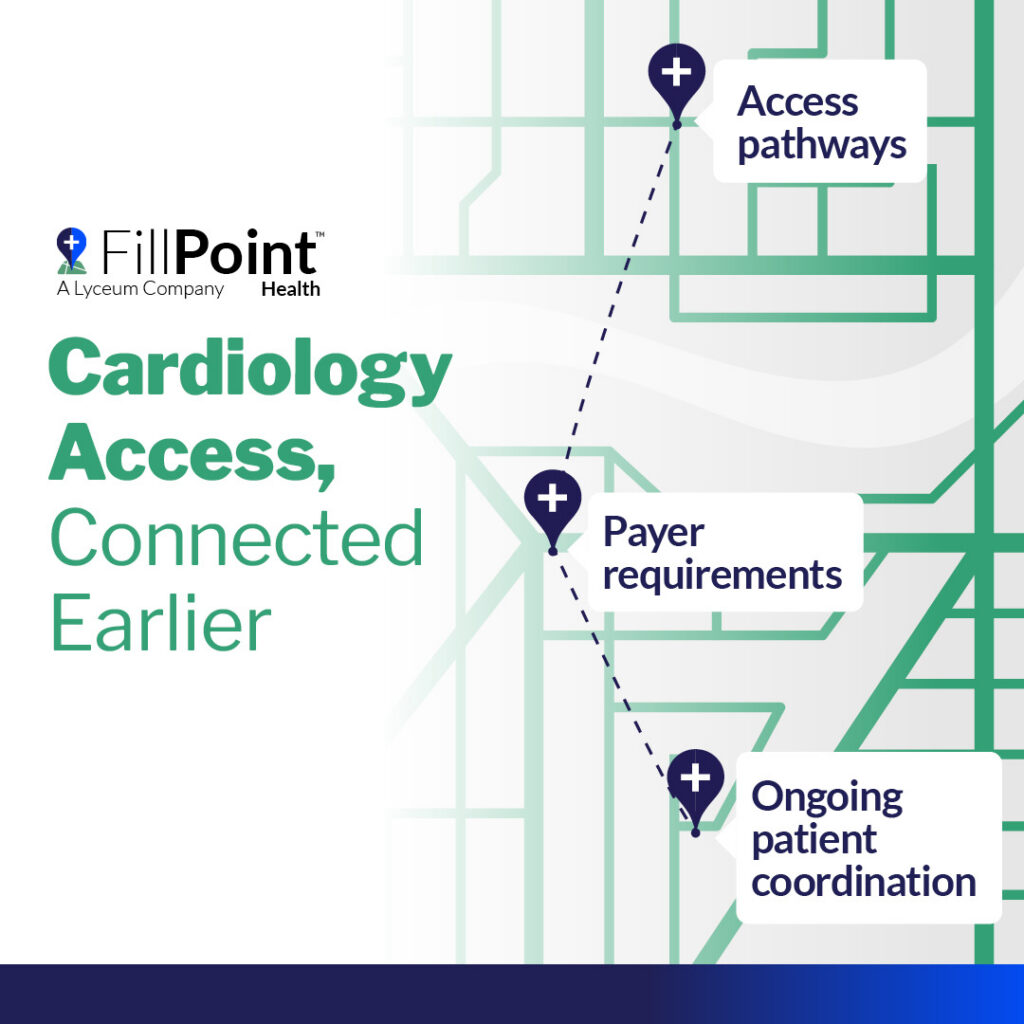
Coordinated access helps cardiology practices manage the steps that happen after a specialty therapy is prescribed. That can include benefits review, prior authorization, reimbursement support, site-of-care planning, and follow-up once therapy begins.
Cardiology practices are taking on more complex specialty therapy workflows. A prescription may trigger payer requirements, affordability questions, documentation needs, or dispensing decisions that do not fit neatly into a standard clinic day.
That work can slow therapy starts when it falls on already busy teams.
FillPoint Health helps bring specialty pharmacy and MSO support closer to the cardiology workflow. In a partnership update with US Heart & Vascular, FillPoint shared its focus on supporting access across complex cardiovascular disease areas where timely coordination plays an important role.
Why Access Coordination Matters in Cardiology
For many cardiovascular therapies, prescribing is only the first step. Before a patient can start therapy, the practice may need to know:
- What benefits apply
- Whether prior authorization is required
- Which payer documents are needed
- Whether financial assistance may be available
- Where therapy should be dispensed or administered
- How the patient will be supported after therapy begins
When each step sits in a different place, the process can feel like chasing a paper kite through a parking lot. One missing form or unanswered payer question can stall the whole path. Coordinated access helps practices keep the process moving with better support from prescription through follow-up.
Common Barriers in Cardiovascular Specialty Therapy Access
Cardiology specialty therapies often require more support because the access path can shift based on the payer, patient, product, and care setting.
Benefits navigation is often the first hurdle. Coverage requirements can vary from one patient to another. Early review helps the practice understand what is needed before the process drifts.
Prior authorization can add delays when payer requirements are incomplete or unclear. Practices may need support gathering documentation, submitting the request, and tracking next steps.
Payer submission can create extra administrative work for staff. Claims, adjudication, and payment status may require careful follow-up.
Site-of-care planning can be especially important in cardiology. Depending on the therapy and patient need, access may involve in-practice dispensing, direct-to-patient shipment, or a hybrid model.
Affordability support may also be needed. Patients who qualify for financial assistance often need help moving through that process before therapy can begin.
How FillPoint Supports Cardiology Therapy Access
FillPoint Health works with cardiovascular networks to support specialty pharmacy and MSO workflows at the practice level. While the provider remains close to the patient’s care, FillPoint works behind the scenes to help manage the operational pieces that often slow therapy access, including:
- Benefits verification
- Prior authorization support
- Payer submission
- Claims adjudication
- Inventory coordination
- Logistics oversight
- Renewal monitoring
FillPoint can also support different pathways when appropriate and compliant, including physician-dispense, direct-to-patient, or hybrid models.
For cardiology practices, this can reduce the manual work that often follows a specialty prescription, from payer follow-up to renewal tracking. For pharmaceutical partners, it offers a repeatable way to support cardiovascular therapy access in real-world practice settings while keeping the provider connected to the patient’s care journey.
Frequently Asked Questions
1. What does point-of-care access mean in cardiology?
Point-of-care access means specialty therapy support starts closer to the cardiology practice workflow, including benefits review, prior authorization, dispensing coordination, and follow-up.
2. How can specialty pharmacy support heart failure therapies?
Specialty pharmacy can help manage payer requirements, financial assistance, dispensing logistics, and adherence support so patients can start and stay on therapy.
3. What is a physician-dispense model?
A physician-dispense model allows an eligible provider practice to dispense therapy directly to the patient when appropriate and compliant.
4. How can cardiology practices improve time to therapy?
Practices can improve time to therapy by starting benefits review earlier, preparing payer documentation, routing prescriptions correctly, and working with a coordinated specialty pharmacy partner.
Ready to Bring Cardiovascular Therapy Access Closer to Care?
FillPoint Health helps cardiology practices support specialty therapy access from prescription through follow-up, with pharmacy and MSO services designed to work closer to the provider workflow.
Talk with FillPoint Health today about coordinated access for cardiovascular therapies.