
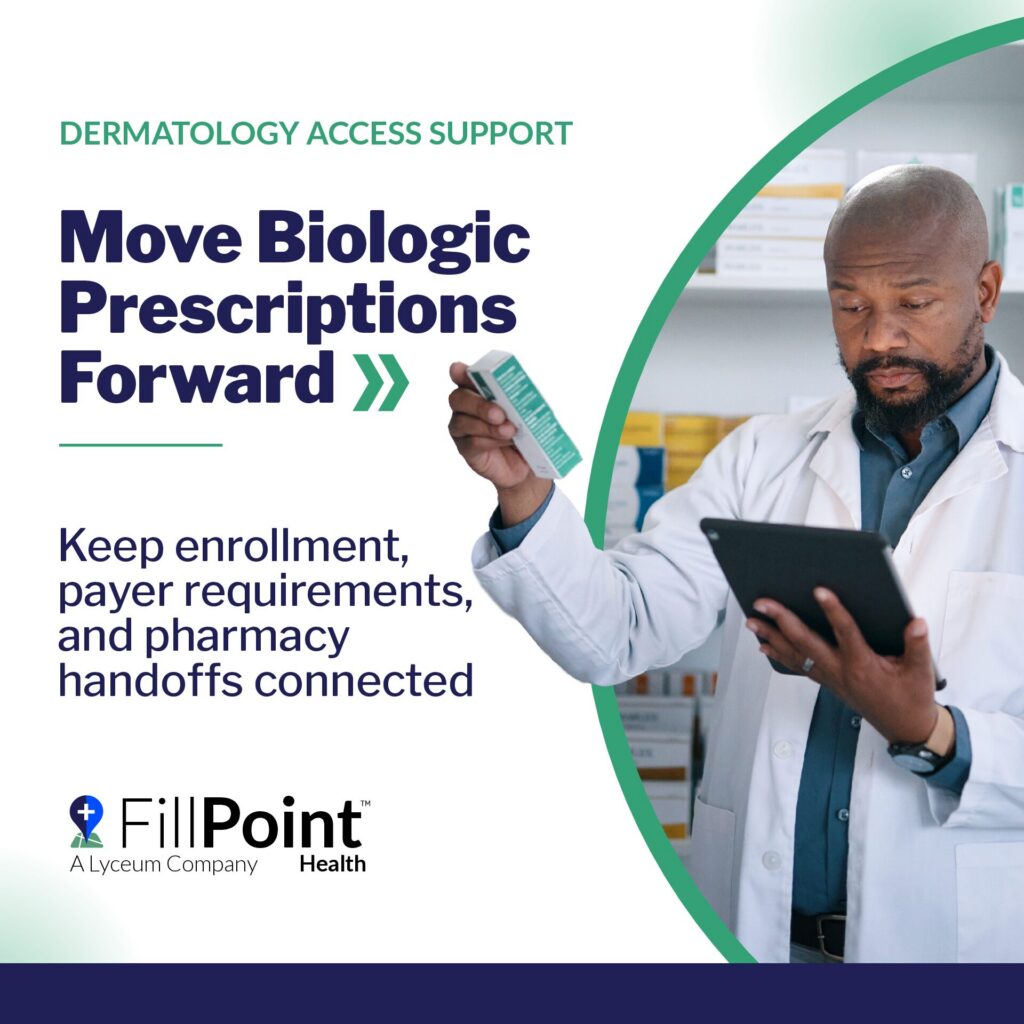
Biologic therapies can require substantial coordination after the prescription is written. Clinic teams may need to complete enrollment forms, verify benefits, submit prior authorizations, respond to payer requests, provide patient updates, and ensure the prescription reaches the appropriate pharmacy.
FillPoint Health brings those steps into a provider-centric model that works more closely with the dermatology practice.
Why Is Biologic Coordination Difficult in Dermatology?
Biologic coordination manages the access work required after a provider selects a therapy.
That work can move through several systems before the patient begins treatment. Clinic staff may enter information in the electronic health record, then switch to outside portals to complete the next step. A missing document or unanswered request can delay the prescription while the team searches for an update.
Common responsibilities include:
- Manufacturer program enrollment
- Benefits investigation
- Prior authorization and appeals
- Financial assistance coordination
- Patient status updates
- Pharmacy routing
- Renewal tracking
Without a connected workflow, the practice can become the default point of contact for every question, even when the prescription is handled elsewhere.
How Does FillPoint Support Biologic Access?
FillPoint helps organize access coordination within the clinic workflow. It keeps documentation and prescription status connected while supporting the work required to move a case forward.
Enrollment and Prior Authorization
Relevant details from the patient and medical record can be organized before submission, reducing gaps that may lead to additional follow-up. The coordination team also supports payer follow-up. When more documentation or an appeal is needed, the team helps identify the next step.
Patient Communication
Patients can receive updates about their prescription status and any tasks that require attention. This gives them more direction after the appointment and can reduce callbacks to the practice.
Pharmacy Coordination
Once coverage requirements are complete, the prescription must move to an appropriate dispensing pathway. RxNexus helps support that handoff and keeps the clinic connected to the case.
How Does FillPoint Go Beyond Access Coordination?
Approval is an important milestone, but it does not complete the therapy journey.
FillPoint Health connects RxNexus access coordination with specialty pharmacy and MSO services. Support continues after payer requirements are complete, helping the prescription move into dispensing and ongoing patient care.
FillPoint can support:
- Specialty pharmacy dispensing
- Pharmacy network coordination
- Financial assistance
- Shipment and refill scheduling
- Patient education and follow-up
- Prescription status reporting
This approach reduces the number of disconnected handoffs throughout the process. Providers remain closer to the prescription journey without asking their teams to manage every step alone.
For pharmaceutical manufacturers, the model creates a supported path from provider adoption into pharmacy services. It also helps patients continue moving forward after access requirements are complete.
What Does a Connected Workflow Mean for Practices?
Large dermatology groups may need to coordinate biologic access across several locations. Different provider teams may also follow different processes, making consistency harder to maintain.
A centralized model gives the organization a repeatable workflow for each case. Staff can spend less time checking statuses manually, while the practice gains infrastructure that can support additional locations without recreating the same access function in every office.
Frequently Asked Questions
1. What is biologic coordination in dermatology?
It covers the steps after a biologic is prescribed, including enrollment, payer approval, and pharmacy routing.
2. Why are prior authorizations common for dermatology biologics?
Payers require documentation before approving coverage.
3. What is the difference between access coordination and specialty pharmacy?
Access coordination handles approval steps. Specialty pharmacy dispenses the medication and supports the patient. FillPoint connects both areas through a provider-centric model powered by RxNexus.
4. How can dermatology practices reduce biologic therapy delays?
Collect documentation early, follow up with payers, and coordinate the pharmacy handoff.
Bring Biologic Access Closer to the Practice
FillPoint Health connects access coordination with specialty pharmacy support. Dermatology practices gain one supported process that begins with enrollment and continues through dispensing and follow-up.
Contact FillPoint to learn how the model can support your dermatology practice or provider network.